
Cutaneous squamous cell carcinoma (SCC) begins in cells called keratinocytes which are found in the epidermis. SCC is faster growing than basal cell carcinomas. Up to 5% of SCC metastasise. Around 23% of skin cancers are SCCs.
Patients who have had a SCC are prone to developing further skin cancer.
Risk factors for all skin cancers include:
Excessive sunlight exposure and sun bed use (UV radiation) and is highest in people with fair skin colour and a susceptibility to burn.
Other risk factors for SCC include:
- Multiple small actinic keratoses
- Being immunocompromised
- High levels of previous UV-A photochemotherapy
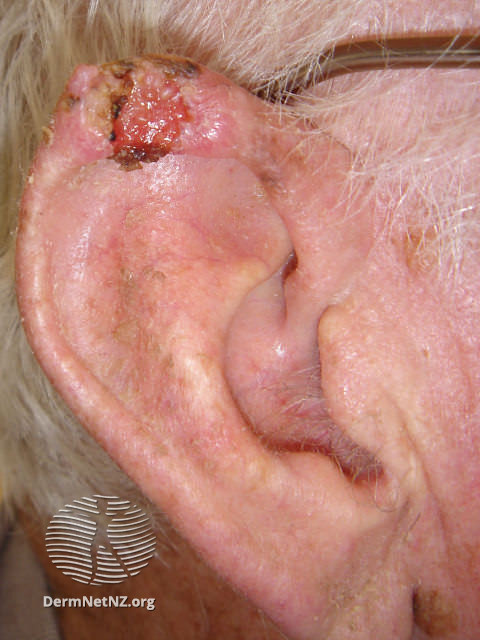
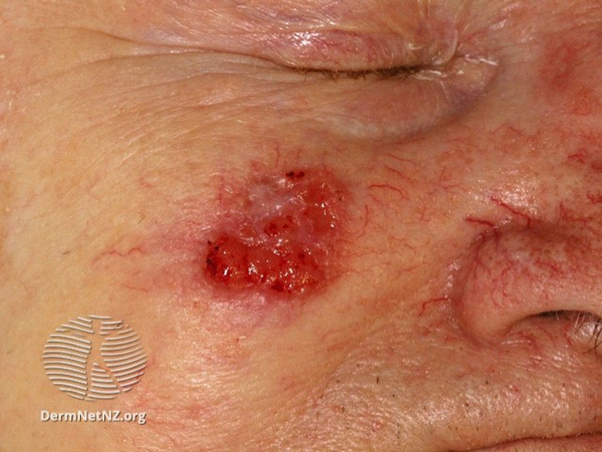
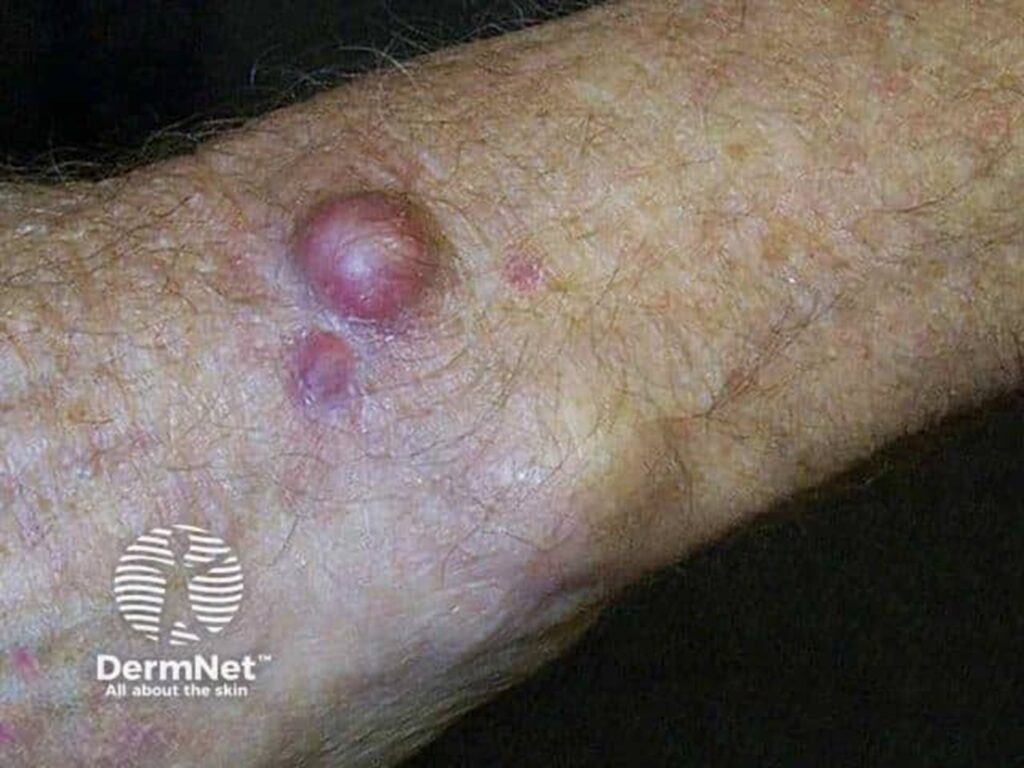
Suspect Squamous Cell Carcinoma if there is:
- Hyperkeratotic (scaly) nodule or indurated (thickened) lesion
- Ulcerated nodule that may bleed easily
- Painful or tender lesion on palpation
- Generally faster growing lesion
- Background of actinic keratosis
Suspect Squamous Cell Carcinoma (SCC) of the nail apparatus if there is:
A lesion growing underneath the nail that may be associated with local tissue destruction
A change such as a nodule growing in an established periungual wart
All images on this page are sourced from DermNet | Dermatology Resource (dermnetnz.org)
Other skin lesions that are concerning for malignancy
The following skin changes should raise concern for a malignant lesion (including Merkel’s tumour, sarcoma, or amelanotic melanoma):
- Nodule grows quickly (over weeks)
- A new change (growth, pigmentation, or pain) in a long-standing ulcer, scar, traumatic or inflamed area of skin
- Non-healing and/or destructive atypical ulcer
- Progressive unexplained scar-like area
- An unexplained skin lesion with loco-regional lymphadenopathy
Please refer these as USOC via the Melanoma pathway.
B.C, C.L & P.O -16-03-2026
Refer as USOC via Sci Gateway: Lauriston/SJH>Dermatology>LI Suspected SCC.
Please use the Using the Consultant Connect App – RefHelp to take photos of the lesion(s) and then attach these to your Sci Gateway referral.
Attaching photos to referrals – RefHelp
Any patient who has a squamous cell carcinoma removed in primary care must be referred USOC via the above pathway.
For Patients
The BAD (British Association of Dermatologists) have PILs on SCC. These can be found at: Patient Information Leaflets – British Association of Dermatologists – Patient Information Leaflets – British Association of Dermatologists
For Healthcare Professionals
PCDS – Squamous cell carcinoma
Scottish Referral Guidelines for suspected Cancer – Scottish Referral Guidelines for Suspected Cancer 2025 DermNet – Cutaneous squamous cell carcinoma: Symptoms, Causes, and Treatment — DermNet