
Possible MSK causes of groin pain
- Hip OA
- Hip dysplasia (developmental changes in shape of the hip socket (acetabulum) seen on XR that can lead to symptoms. Acetabulum is more shallow)
- Femoro-acetabular impingement syndrome (FAIS) (pinching or catching in the groin from symptomatic contact of the femur on the acetabulum or soft tissues- diagnosed by symptoms, signs and imaging findings)
- Iliopsoas tendinopathy or inflammation (often presents as pain in central/lateral groin on kicking /lifting leg up stairs, due to overuse). May be associated with internal snapping hip (deep clunking +/-pain deep in groin)
- Pubic related (pain in region of pubic symphysis)
- Internal snapping hip
- Frozen hip (stiffness in hip joint – independent of the presence of OA) (Similar to frozen shoulder)
- Hip related groin pain without bony morphology – labral, chondral damage
- Adductor related groin pain
History
- Can be traumatic or repetitive in onset, or following increase in training
- May have joint hypermobility
Signs
- Sharp catching central/lateral groin pain
- ‘C’ sign – patient puts thumb on site of pain and index finger further lateral indicating pain deep between the two
M.A & J.G – 9-7-25
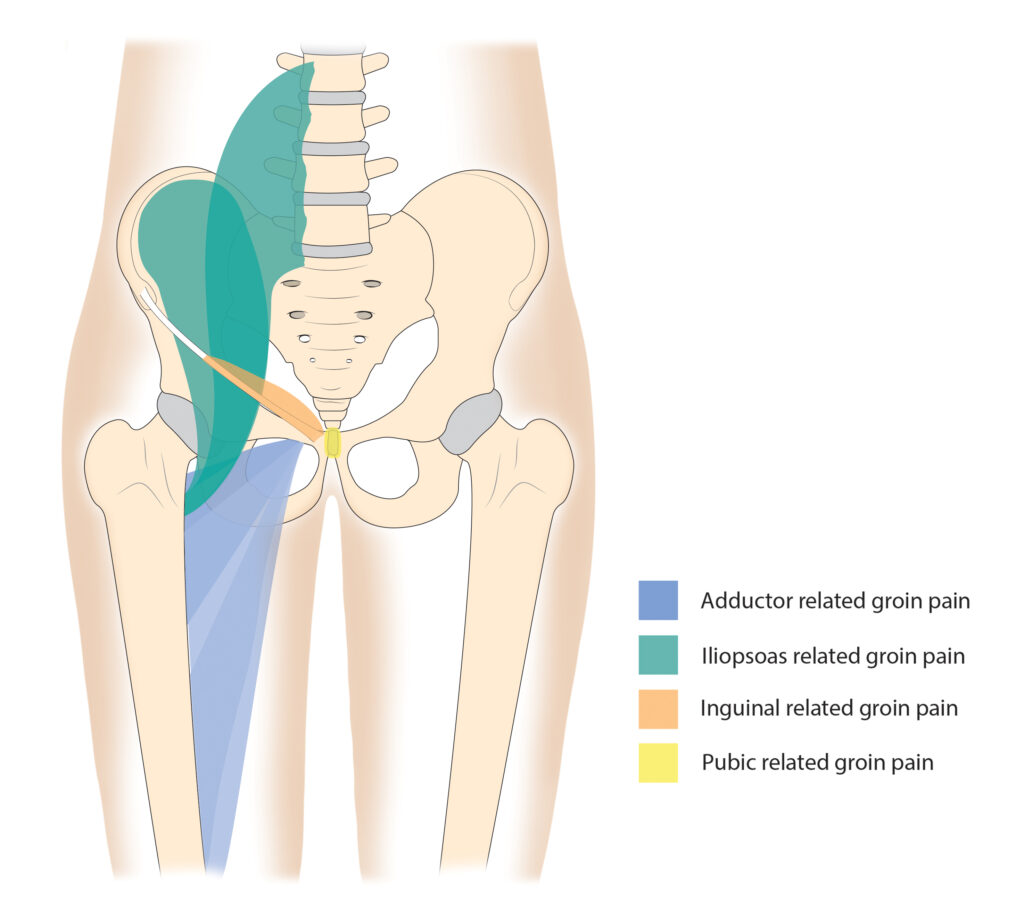
It is useful when referring to describe the main site of groin symptoms:
Adductor – adductor tenderness and pain on resisted adduction
Iliopsoas – iliopsoas tenderness, pain on resisted hip flexion AND/OR pain on hip flexor stretching
Inguinal – pain in inguinal canal AND tenderness of inguinal canal, without hernia, aggravated by resisted abdominals or Valsalva/cough/sneeze
Pubic – local tenderness of pubic symphysis and immediately adjacent bone
Who can refer:
GPs, GPAPPs, other Consultants
Who to refer:
Patients without OA on XR who have failed to improve despite at least 3 months of targeted hip specific physiotherapy
Who not to refer:
If OA is seen on XR – AP pelvis, refer to Arthroplasty
Red flags for groin pain: see home page Adult Non Arthritic Hip Service – RefHelp
How to refer:
SCI gateway > Lauriston Buildings > Orthopaedics – Hip > LI Adult Non Arthritic Hips
Primary care investigations
- XR AP pelvis (to assess for OA, dysplasia and bony morphology of hip)
Primary care treatment
Physiotherapy referral for at least 3 months of targeted hip specific physiotherapy